The Making of "The Pupa": Turning One Made-Up Word Into a Whole Video
The title came from a wall, not a whiteboard. Our dog barked at exactly the right moment, and a song about metamorphosis got its name before a single lyric was written.
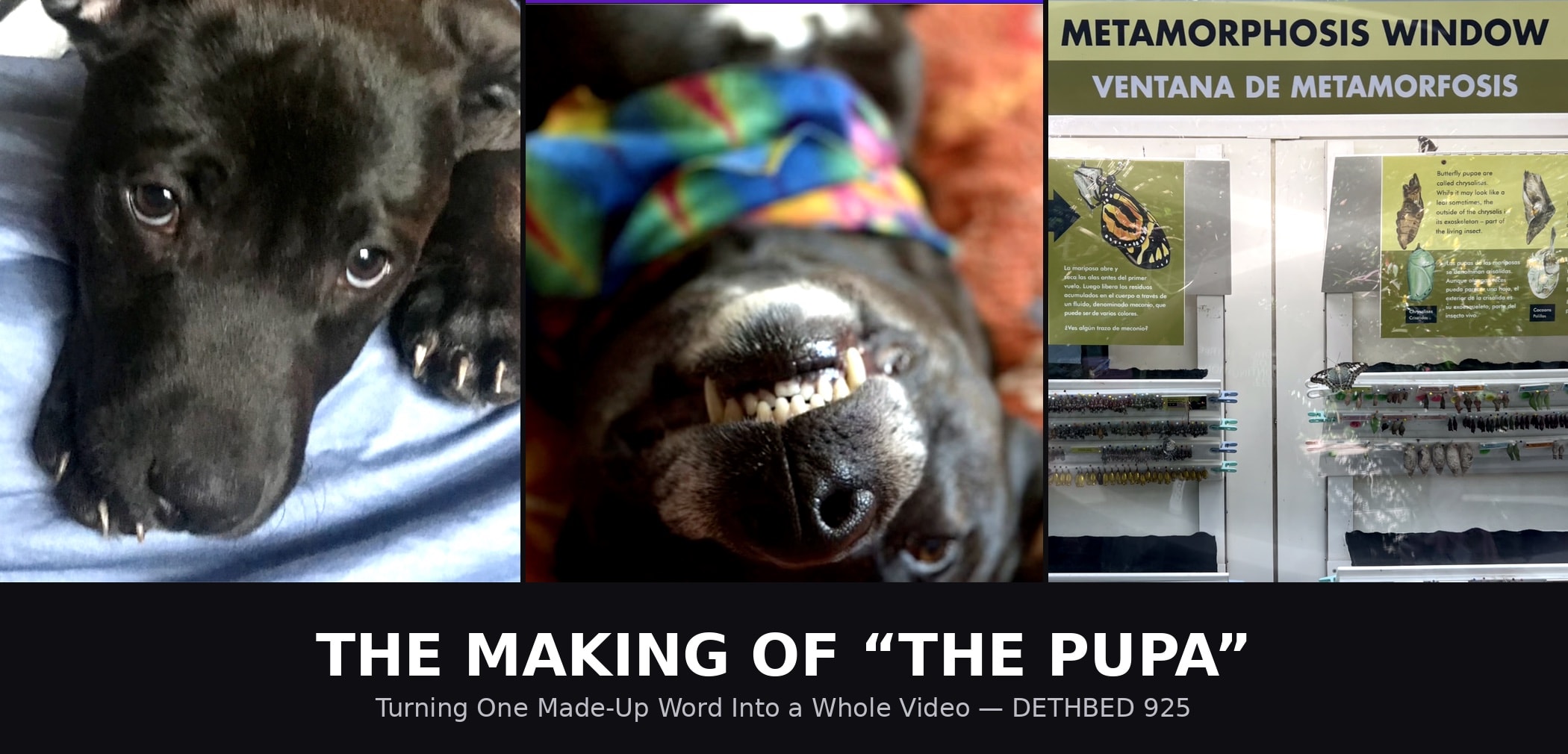
The title of this song came from a wall, not a whiteboard. We were recording early: Ace had just started playing a slow, melodic riff for the song's intro, something we could all settle into together, and Rick was easing his way in on drums. I was in the vocal booth listening when I heard Pupa, our dog, start barking on the other side of the wall, which is really just the front yard of my house. Somebody was probably walking their dog past the place at exactly that moment. Without really planning to say anything, I said out loud, "there's the Pupa." That was it. That was the title, decided before a single lyric was written, because our dog picked exactly the right moment to bark at a stranger walking by.
There's a name for that kind of moment: the butterfly effect, one small, random thing (a stranger walking a dog past the house at exactly the wrong second) setting off something much bigger down the line. Most people already know the phrase. Fewer probably clock that our whole metamorphosis runs the same path, caterpillar to pupa to butterfly, and it started with exactly the kind of moment the phrase describes.
(Because nothing screams profound artistic breakthrough quite like naming your debut track after a literal, slimy grub stage that middle school biology teachers forced you to stare at under a dusty microscope while questioning your life choices.)
Pupa is our black pit-mix puppy, and once the title stuck, the song grew into being about metamorphosis, which meant it eventually needed its own word too: "metamorphisizing" wasn't a word until we created it while making this song. A song about transformation, named after a dog mid-bark, built around a word that didn't exist yet.
Starting with a word nobody's heard before
The opening stretch of the video does something we don't usually do: it defines its own vocabulary on screen. Since it's not a real word, the video treats it almost like a dictionary entry, in italics, sitting under the lyric the way a definition would. It sets the rule for the whole video before the first verse is even over: this is a song that's going to teach you something about itself as it goes.
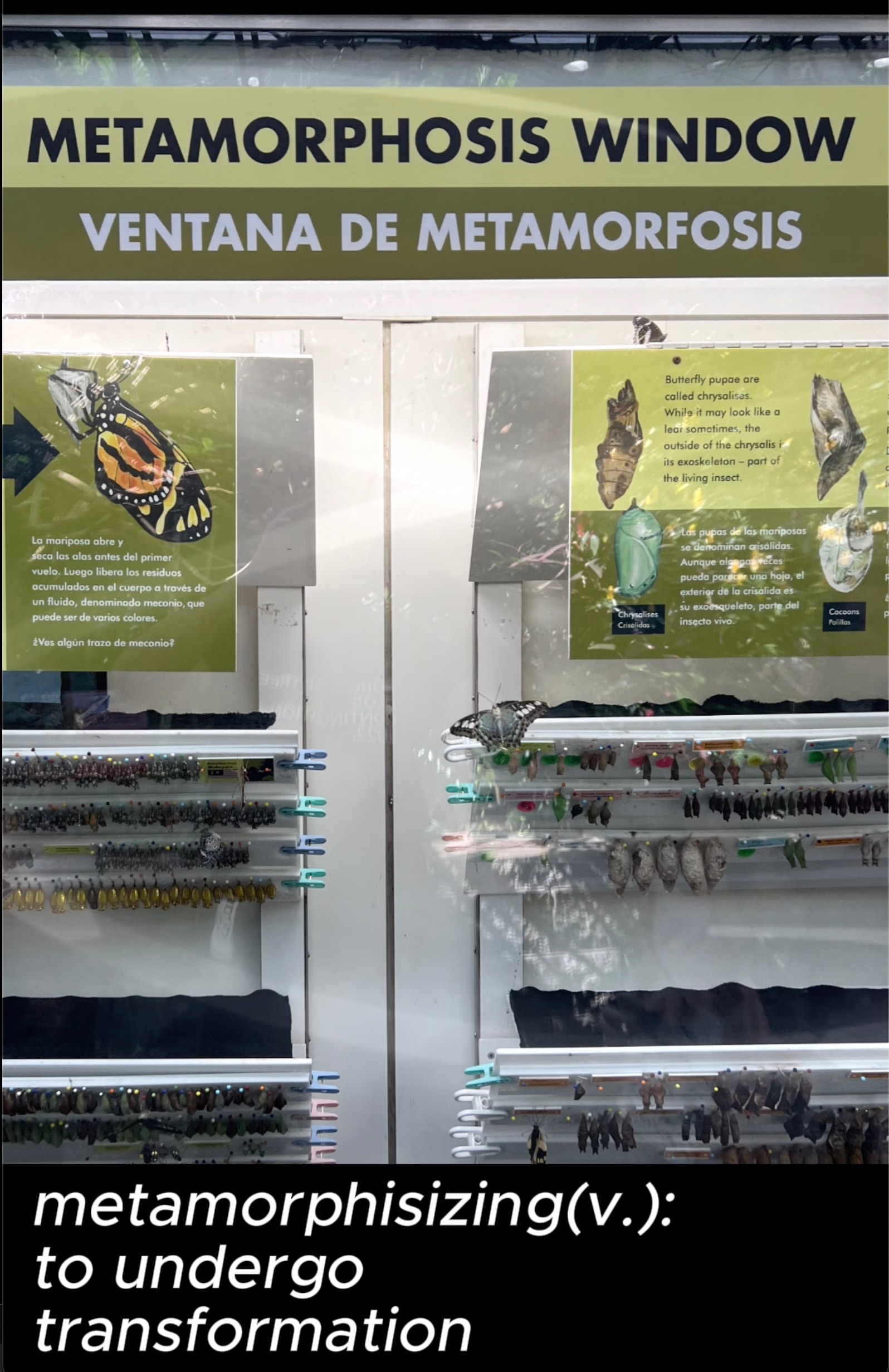
For a brief, highly delusional moment, I was convinced I was getting a plaque or a Nobel Prize from Merriam-Webster for expanding the English language. Okay, that part isn't actually true. What's true is I made up a real word, so my first thought was: where's my check? I got far enough to start pricing out tickets to see the Bills play the Rams with money I hadn't actually earned yet. Turns out the answer was zero dollars. Not one cent.
I still spent hours typing "metamorphisizing" into Google. Nothing. Turns out the people who actually write the dictionary aren't scouring Dublin home studios for fourth-grade grammar mistakes. I've got better odds of getting a call from Webster, the kid from the 80s sitcom, played by Emmanuel Lewis, who's 55 now and runs the Radio, Music & Film Alliance of Georgia, than I ever will from Merriam-Webster. Either way, our brilliant contribution to the English language still sounds like something you'd yell out the window on a field trip.
You're welcome for that fact, by the way. Consider it another free public service from DETHBED 925, home of critical information nobody asked for.
That rule mattered a few lines later, when the lyrics turn to "ancient times have come and gone, history teaches us it's ours to learn from." We had a photo ready: three individual images of a pupa, which, grammar nerds will know, technically makes it "pupae." Our first instinct was to give pupae the same dictionary treatment we gave metamorphisizing. But metamorphisizing needed defining because we invented it. Pupae is a real word that most people just don't know how to say. So instead of a definition, we gave it a pronunciation guide, PUPAE (n.) pyoo-pee, in the same italic style as the first card, so the two moments rhyme visually. Both moments land on the same lyric, "it's ours to learn from," so the video is quite literally giving the audience a lesson right when the song says it's about to.
Nothing says rock and roll like a pronunciation guide. Somewhere my old liberal arts teacher, who gave my 1984 essay comparing death metal, power metal, poser metal, thrash metal, black metal, and white metal an A, is finally shedding that single proud tear.
The kaleidoscope effect that became a running motif by accident
The video leans on one main visual effect: a kaleidoscope treatment, first used deliberately on the "metamorphisizing" line early on, chosen specifically because it played off the existing motion blur in that clip rather than fighting it.
Later, the same effect ended up on a completely different shot: Curran on bass, around the "all of our will becomes clearer" line, and that one wasn't planned. It was a mistake. But watching it back, it didn't read as a mistake at all. To anyone who doesn't know how the video was built, it looks like a deliberate callback, tying the transformation imagery together a second time without literally repeating the same clip. We kept it. Sometimes the video knows what it's doing before you do.
A scar, a puppy, and two ways to show time passing
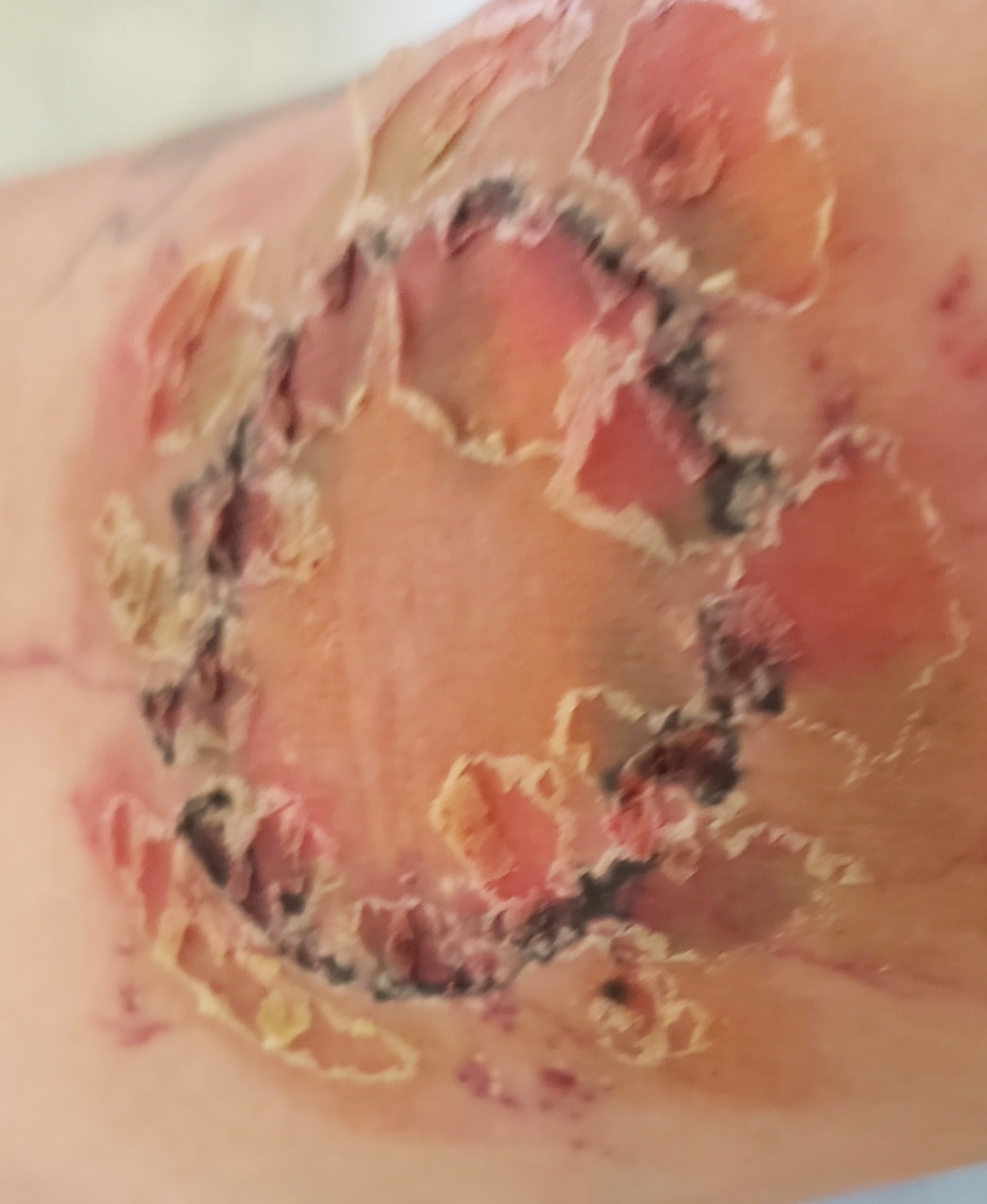
Some of the most personal touches in the video are the ones nobody would catch unless you told them. Around the same "ancient times have come and gone" section, there's a close-up shot that looks, out of context, like an odd bit of texture: warm-toned, slightly abstract. It's actually a photo of our guitarist Ace (also known as Adrian) and a tattoo scar, taken while it was actually infected and in the process of healing. It's real, unstaged evidence of a body changing over time, not a cleaned-up version of it, sitting right on top of a lyric about history and change. That's the kind of detail that rewards someone who's actually paying close attention, instead of just watching a lyric video scroll by.
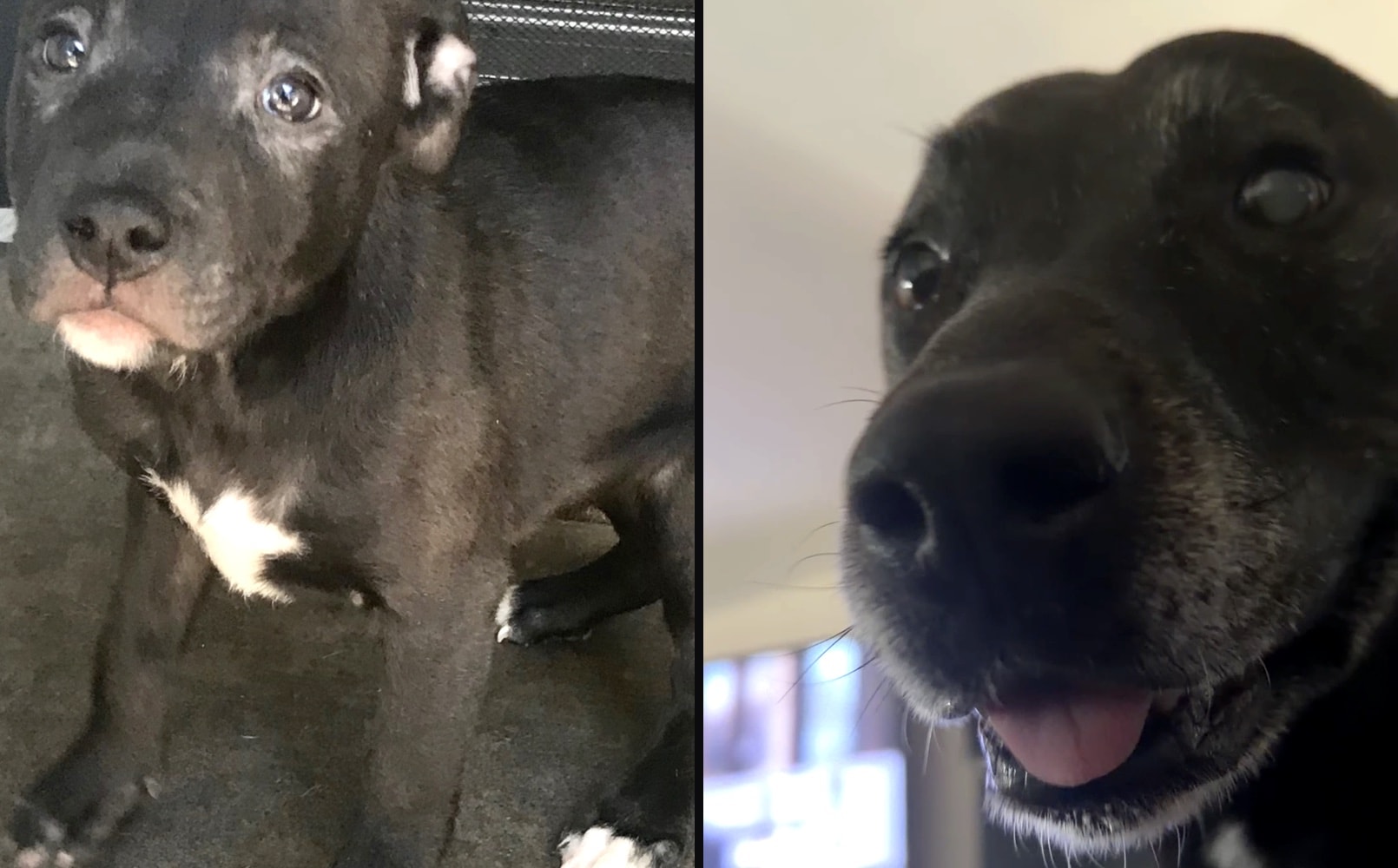
The dog gets her own version of that idea. Rather than just show a cute photo of Pupa and move on, we built a quick flash cut between a puppy photo and a photo of her today: same dog, two very different points in time, cut together fast enough that you feel the time jump rather than just seeing it explained. It's the whole theme of the song in about half a second: still her, but not the same as she was.
Building it by hand, mistakes included
None of this was assembled by an algorithm or an AI auto-edit. It was built clip by clip in CapCut, with a lot of manual dragging, nudging, and re-nudging until things landed in the right spot, including working through some genuinely strange software hiccups along the way, like clips that refused to move where they were dropped. This is the first video I had ever tried to edit in CapCut. My original plan was simple: just the lyrics, timed to the song, nothing else. But once I started figuring out how to bring in video and photos, and playing around with effects, the whole thing opened up. It stopped being a lyrics slideshow and became something that could hold real, fun moments from the studio too. I spent a week working on it and learning the software at the same time, and I still feel like there's a lot more to learn.
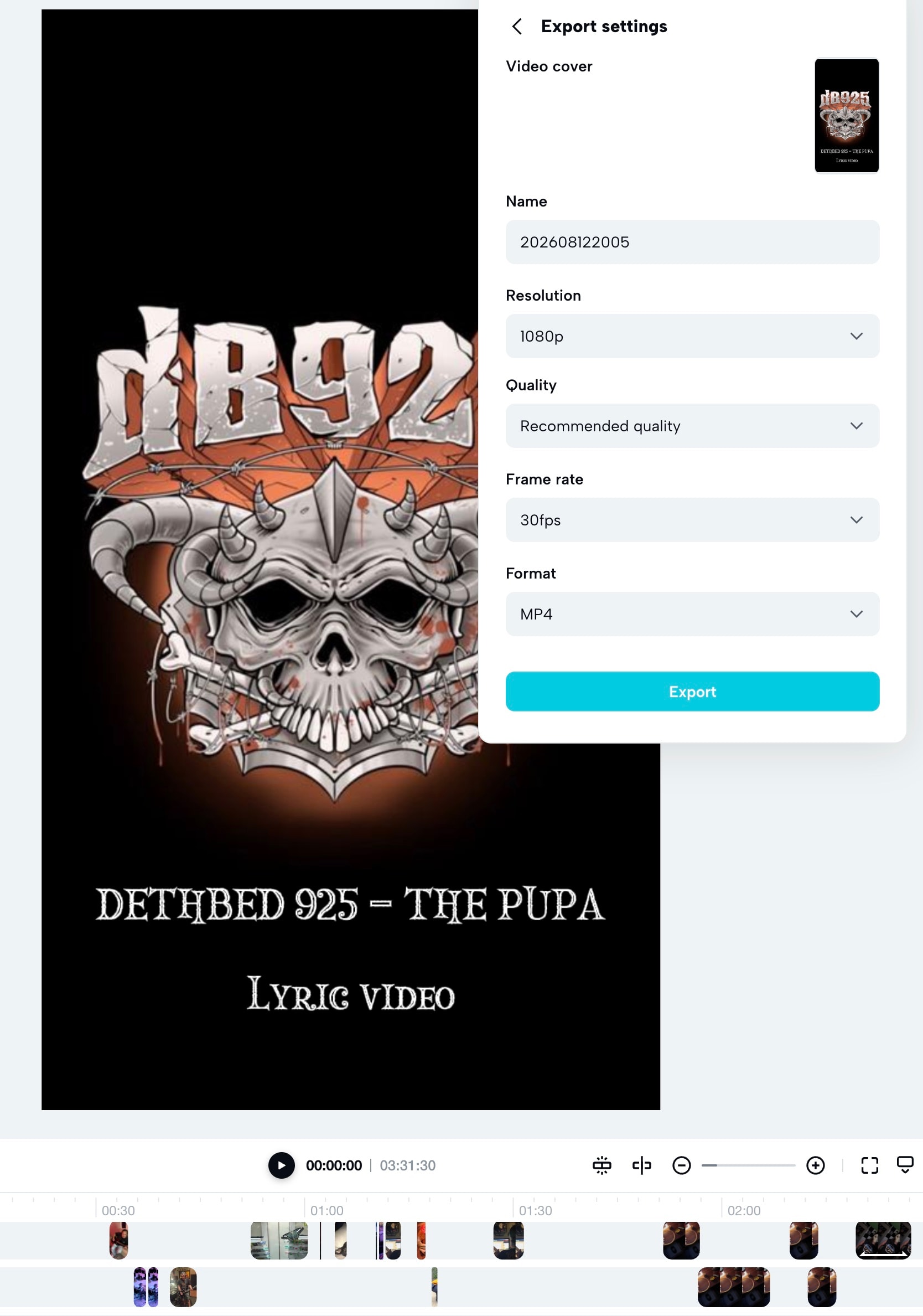
A lot of the footage was shot right where the song itself came together: our DETHBED 925 home recording studio in Dublin, California. Other locations threaded through the video include a purple, mushroom-tapestry-and-skull-shelf room for both acoustic guitar footage and a separate "calling" clip synced to the "calling the saints" lyric, and the black electric guitar and headphones setup shot at Shine On Studio. Small pieces, gathered from different sessions, stitched into one continuous story.
And let's be honest about why nobody else has ever recorded music in a place like this. When Ace first came over to my studio years ago after answering a tear-off ad at a local music store on Village Parkway, just across the street from the Back Lounge, he genuinely thought my old drummer from Buffalo, Johnny Panic, and I were going to kill him. He still tells people he didn't tell a single soul where he was going that day, because he figured we'd dump the body and keep his gear. But the reality is, we aren't some cookie-cutter death metal or black metal act. We just like to go deep under the sea (hence writing a song called "Scraping the Bottom of the Ocean" and rocking a heavy-ass deep-sea diving helmet in the video) and reach far out into the universe. None of us are going to be fancy musicians. We just like to make different sounds with our instruments. When you're charting waters where nobody has ever been before, you end up in uncharted territory, skull shelves, mushroom tapestries, and all.
The export bug that nearly won
I now know more about CapCut's export settings than I know about some of my own relatives. That's not a joke. That's just sad.
For about half a week I could not get the full three-minute-and-33-second song to export in one piece. It kept cutting off at almost the exact same spot every time, three minutes and two seconds, no matter what I changed. Then, after a few more edits trying to fix it, it got worse: exports started cutting off at three seconds instead.
One of those broken exports actually left us with a clean 46-second version partway through the mess, and instead of treating that as just another failure, we used it: it gave us a natural checkpoint to polish the opening of the video to a five-star standard while the rest of the export problem still got sorted out.
I searched everywhere for a real fix. Google, AI chats, CapCut's own Facebook community groups. Nobody had an answer, and some of the Facebook groups I found were active in other languages entirely, so even asking the question clearly didn't get me anywhere. There were a few days in there where I genuinely wondered if I was ever going to get this song to export as one finished piece.
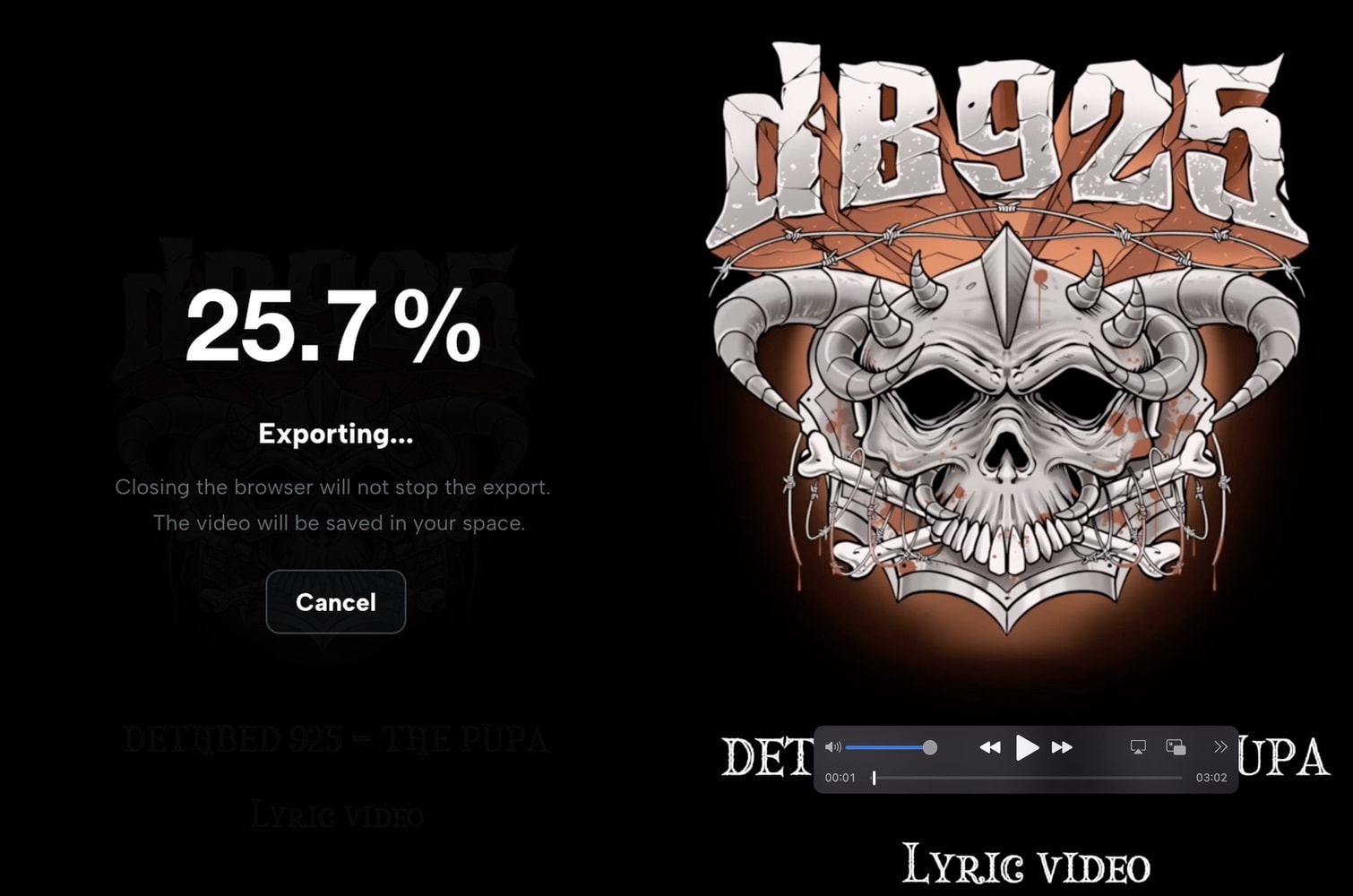
The fix, when I finally found it, was almost anticlimactic: downloading CapCut's desktop app instead of relying on the web version fixed the export problem outright. If you're reading this because you Googled the exact same error I did, that's the answer. My problem just became your solution.
Credit where it's due, though: CapCut is what made the rest of this possible. I went in thinking I'd throw together a simple black-and-white lyric video, mostly just to get a new song out into the world. Instead I started picking up little tricks along the way, blending in photos, layering in video, playing with effects, and the whole thing kept turning into more than I'd planned. It was a genuinely fun experience, and every bandmate who's seen it so far has told me how much they enjoyed it.
So to recap: we invent words, and now, apparently, we fix your CapCut export settings too. DETHBED 925: now with 5 Star customer service.
Where the name "Dethbed" came from
This song, and this band, didn't start with "The Pupa." It started about 40 years ago in a cover band playing out of my parents' basement in Buffalo, with a drummer named Rick Andolina.
We lost touch for decades, the way people from a basement cover band do. Then I saw Rick on Facebook and realized he'd moved to California and was living close to where I was in the middle of remodeling my garage into what's now our home studio. He'd posted a photo of his drum kit, saying he wished he could still play them. I told him what I was building. Not long after, we were putting a new project together.
At first the band was called Medic Sun. All three of us were working together in the solar industry at the time, and the name made sense for where we were in life. Then Rick got sick while we were in the middle of building this project together, and we renamed the band Dethbed, half-joking, because we suddenly all felt old. None of us thought it would end up meaning what it did. We genuinely believed Rick was going to get better, and that we'd all get to play these songs live together once he did.
Rick passed away before that happened, but DETHBED 925's permanent lineup has always been Ace on guitar, me, and Rick. Somebody just has to physically play his parts now. That's Chris Lujan, from Shark in the Water, who came in to play drums on the actual studio sessions, with Troy Alexander locked in right alongside him on bass, recorded with engineer Juan Urteaga at Trident Studios in Pacheco, California.
Getting Troy on the song came together in a funny way. I'd been trying to get him into the studio with me for a while, and when he finally asked who the drummer was going to be, I told him it was Chris. His response: "hey man, that's my drummer." Turns out the two of them were already playing together in a cover band. Small world.
Rick was there from the very start of this song too, as one of its original songwriters back when we were still Medic Sun, even though it never got released under that name.
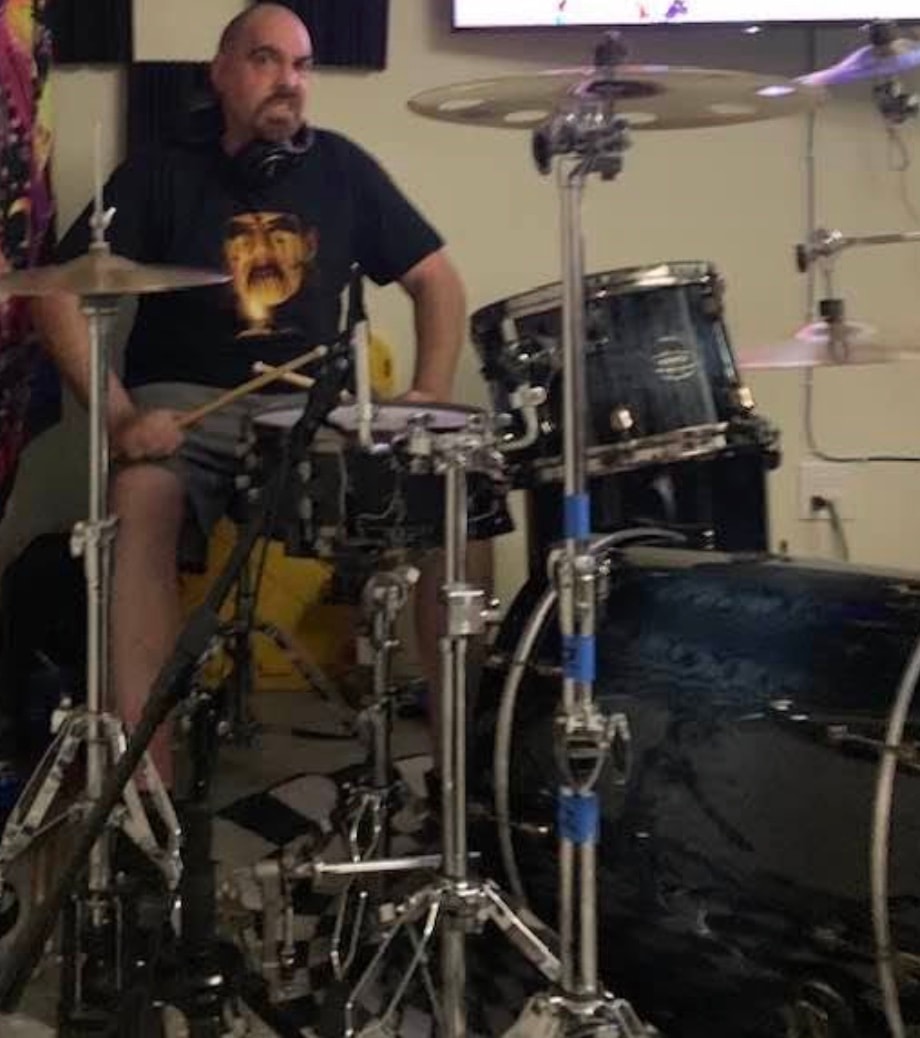
So when "The Pupa" talks about metamorphosis, about things ending and becoming something else, it isn't just a lyric idea we liked. The band itself went through exactly that. DETHBED 925, and this song, exist because of a basement cover band forty years ago, a reconnection on Facebook, a garage turned into a studio, and a friend who helped write it and never got to see it finished. This one's for Rick.
Why it all fits
Looking back at the finished video, none of it was really planned out ahead of time. It was more like one clue leading to the next: I'd make a change, and that change would hand me the next idea, on and on until the whole thing came together. Really, it's the story of a few grandpa-aged metalheads having fun and just letting the music tell us where to go.
At its heart, it's the life of a dog standing in for the life of a person, growing, changing, getting older, same as the rest of us. Maybe that's the whole point of the song and the video both: don't fight what feels like an obstacle. A caterpillar doesn't fight the cocoon, it comes out the other side more beautiful. Celebrate being alive while you still are. I wasn't trying to make the video transform so much as I was letting it tell me where it wanted to go.
The video is done now, start to finish, and we're genuinely proud of it. We're sitting on it for just a little while longer though: it goes live for everyone on Saturday, September 12th. Think of this post as the warmup. Building "The Pupa" taught us the same thing the song is about: sometimes the best ideas come from the mistakes you decide to keep.